
Overview
Claude Code
Terminal AI coding partner: multi-agent orchestration, persistent memory, background tasks — all running on your subscription quota.
Claude Code is the terminal-based AI coding tool under Claude, powered by the Claude family of models and included in the same subscription. Version 2.0 upgraded it from “a tool for writing code” to “a digital teammate that takes over the entire engineering pipeline” — subagents let multiple agents handle research, coding, and review in parallel, checkpoints support one-click rollback to any point, long-running tasks keep going in the background, and CLAUDE.md plus cross-session memory preserves your project preferences and decisions. The dynamic workflows launched in May 2026 alongside Opus 4.8 push it even further toward an agent-cluster form for ultra-large-scale tasks.
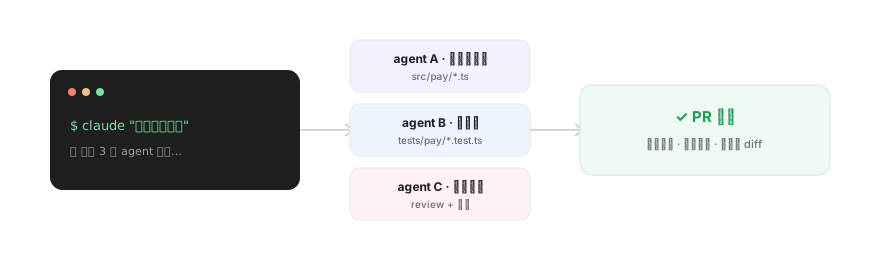
The most common pattern is handing it the whole job: during large refactors, multiple agents work on different files in parallel, review each other’s changes, then merge; when CI breaks, it automatically pinpoints the failure, fixes it, and reruns; when you take over a legacy codebase, it reads all the code in one afternoon and hands you an architecture diagram. Pricing follows a subscription-quota model: it’s included in Claude Pro ($20/month) and Max ($100/$200/month), sharing the same quota pool as web chat — a hidden advantage over pay-as-you-go tools: a flat monthly price locks in your cost ceiling.
Positioning-wise, it’s the flagship of the “terminal-native agent” approach: compared with Cursor’s IDE form factor, its strength lies in agent depth (subagents, hooks, MCP, plus the Agent SDK for building on top); compared with OpenAI Codex CLI, it’s bound to the Claude family of models. It’s built for “handing over the whole task” rather than tweaking line by line as you go, and many people pair it with Cursor. There’s also a recent wave of perks: Fable 5 was once made available through subscriptions (free within 50% of your weekly limit, with the free period extended several times), and the +50% weekly-limit boost is still in effect.
Note: subscription quota is shared with web chat, so heavy usage can hit the ceiling quickly (Max 20x offers roughly 20x Pro’s quota); for API access to Fable 5, keep an eye on its safety classifiers and data retention requirements — in production, it’s advisable to configure Opus 4.8 as a fallback.
Source: Agentopia · Full machine-readable site catalog at /llms.txt
Launches alongside Opus 4.8: agent clusters built for hyperscale tasks
Checkpoint rollback, subagent orchestration, background tasks, VS Code extension
Debuts the same day as Claude 3.7 Sonnet

 码上飞

 Cursor

 Lovable